If you are buying an apartment, you should look at the bin store before making any decision. If you want a quick picture of your potential new neighbours and how the block is run, it’s a good litmus test.
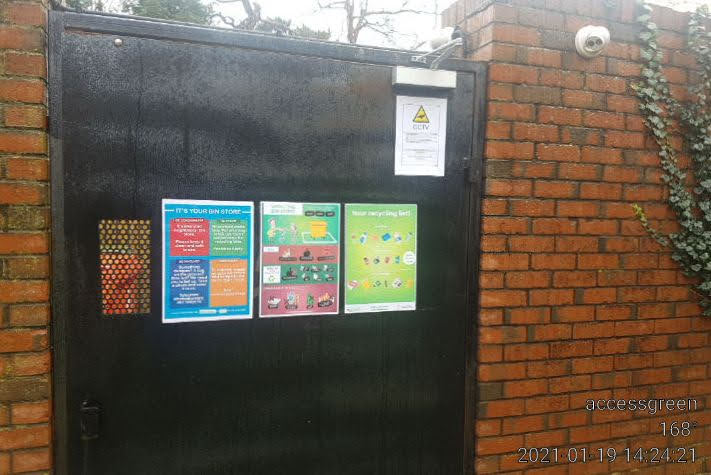
Above: Someone has made an effort here.
For 10 years we have learned about residents' behaviour in bin stores from deploying mobile-phone-based access control and CCTV. We can match breaches of the house rules to the individuals responsible. The most common excuse from a resident caught dumping bulky waste or contaminating is "I didn't know you couldn't do that". Clear image-based signage with links to full written instructions at the bin store is the answer (and required by the waste management bye-laws for apartments).
When something goes wrong in the bin store, people use words like “absolute disgrace” and “completely unacceptable”. There is an emotional connection to waste, often felt as disgust. The unfairness of it all rankles too.
Often the people who complain about the bin store have the skill of making themselves heard. You will have heard them. Some of them opine that "the state of the place" is caused by tenants (who “don’t care as much as owners”); or, such-and-such an ethnic group "aren't used to recycling like we are".
In fact, from looking at CCTV over the years, I can tell you that the issue of bags or litter being left on the ground is most often caused by two groups. The first group is those that struggle to deal with the physical environment of the bin store: children and the elderly. Neither age group finds it easy to dispose of their household waste properly in the industrial / commercial set up in apartment blocks. They are not strong enough to open the lids of 1100L wheelie bins or lift up their bags of rubbish over the rim.
When you were young, your chores may have included putting the bins out, but in most apartment blocks it is not a suitable task for the young. I recommend unaccompanied children do not use the bin store.
When we connect an incident of dumping observed on CCTV with the apartment responsible, we often find there is a story of loss or illness. Perhaps we need to focus on the stories around waste.
In one apartment block, directors were enraged by continual dumping. A solitory white bag of waste was being left inside the door each week. We found out a woman recently widowed was leaving it there as she was too afraid to enter the bin store. Her husband used to deal with all that.
The management companies should offer to help older owner occupiers use the bin store. If only as a mark of respect. It will also go some way to stopping bags ending up on the ground.
The second group that cause the most issues are the waste collectors. They do a hard thankless job, but they can create a mess when moving bins that are overfilled. Bags fall off and sometimes fall under the moving bin. Sometimes the drivers prop the door open with a bag (or worse, disconnect the door closer) so they can bring the bins in and out of the bin store unimpeded by the closing door. Unfortunately, I’ve seen the bag kicked to one side (or the door closer left unhinged) when they are done.
Like inviting a vampire into your home, if ex-residents do not lose access to the bin store, they will return (with their bulky waste) to bite you.
Dumping by non-residents from outside your block is very difficult to deal with. The local authorities / litter warden rarely get involved in private estates. And if the dumpers can access your bin store, there's no chance of help. Sad to say but realistically you need to make your block more difficult to dump in than the next block.
There is a theory that the 1% of the population that are psychopaths cause most of the issues for the rest of society. In terms of the bin store, about 1% of residents just don't care.
While bags and bulky waste are visible when left on the ground, commercial waste from sole traders living in the block can go into the bins unnoticed. This can be a weekly activity and it is most often spotted by residents who notice vehicles outside the bin store. Encourage vigilance but discourage confrontation. Noting the reg plate is usually enough to allow the management company to act.
The Owners Management Company (OMC) is charged per lift, not by weight. A prudent approach is have the provision of bins match the weekly requirement so there are no extra bins being lifted. Otherwise two bags can cost as much as twenty five bags when a near empty bin is lifted. However, you lose the resilience that a spare bin gives you when something goes wrong.
A missed weekly collection will result in a near landslide of bags.
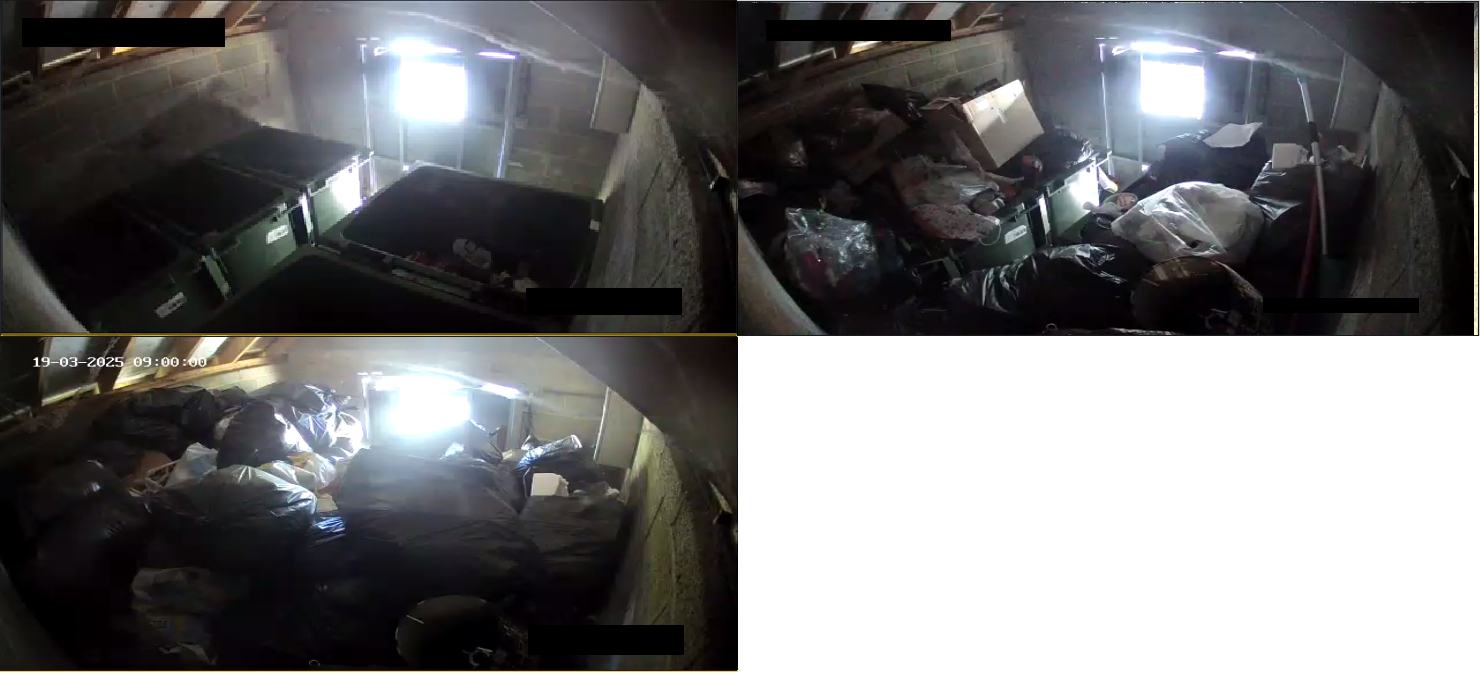
Above: Missed collection
In a apartment bin store there are usually large 1100L commercial bins. Sometimes, smaller blocks will have 660L bins. The bye-laws state there should be at least three different types of receptacle. The concept is that the bins are colour coded: black lids for residual or general waste; green lids for Dry Mixed Recycling. Brown lid for organic. In practice, the bins could be any colour depending on the waste collector. And there may only be residual waste bins (although there has been a real push over the past 3 years to get brown bins in following on from the Apartment Brown Waste Survey.
I favour the term “residual waste” for the general waste bin. You can’t really specify what should go in a general waste bin. There are bye-laws as to what shouldn’t go in it but it’s really for what’s left over after everything else (bulky waste, electrical items, combined plastic items, paint, clothes, plastic bottles, packaging, etc.) is sorted and disposed of in another facility or bin.
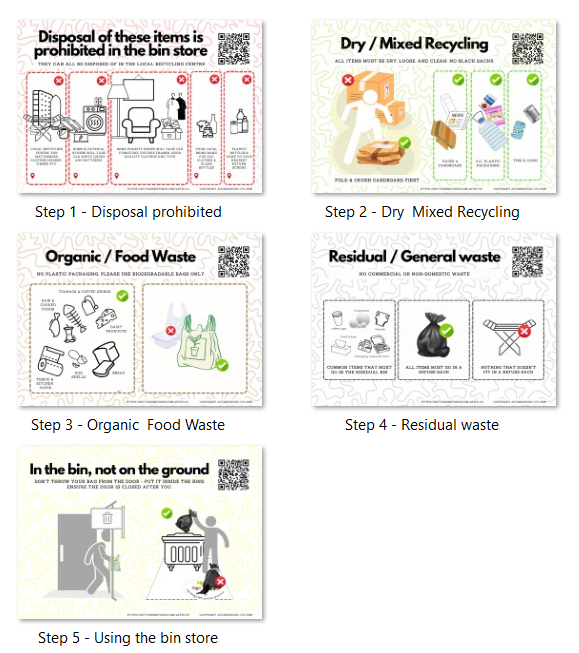
Above: Filtering the waste stream to divert items away from the bin store.
MyWaste.ie is a great resource. It is a one-stop shop for all things waste in Ireland. Unfortunately, I feel it doesn't do enough to help with the specific challenges of using a bin store. In other countries, research finds apartments present extra challenges for waste production, collection, sorting and disposal.
Unfortunately there are some social housing agencies who do not engage with efforts to sort waste and recycle.
There is some part of the human psyche that doesn’t want to throw things away. This plays out with items like picture frames & paintings, lamps, large toys, bedroom furnishings being left beside the bins or put in the recycling bin as if another resident will come along and want to take it home. There is the odd resident who will look for a bargain in the bin but these type are few and far between.
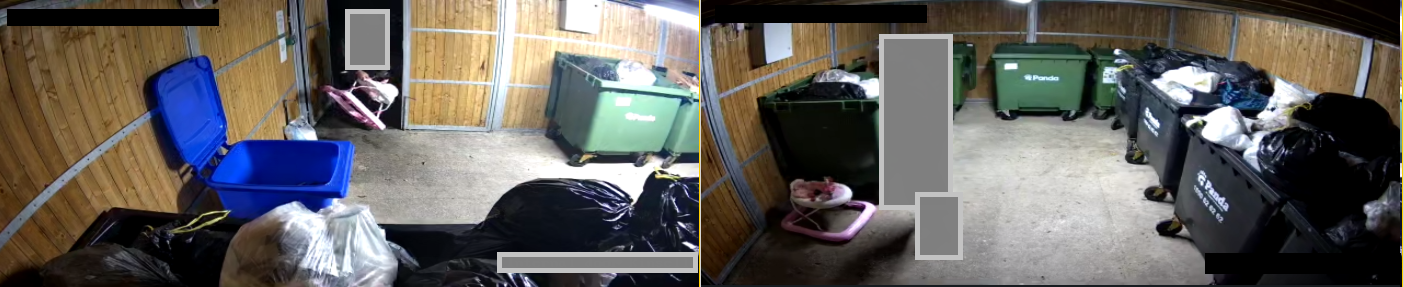
Above: What is this person thinking? That someone else will want to use this item?
The most common items dumped in apartment bin stores beside the bins are: clothes horses and ironing boards. Next comes suitcases, and then children’s toys. Bed frames and curtain rails are frustratingly resistant to fitting in a bin. They are often found propped up against the wall or sticking out to the side of a bin.
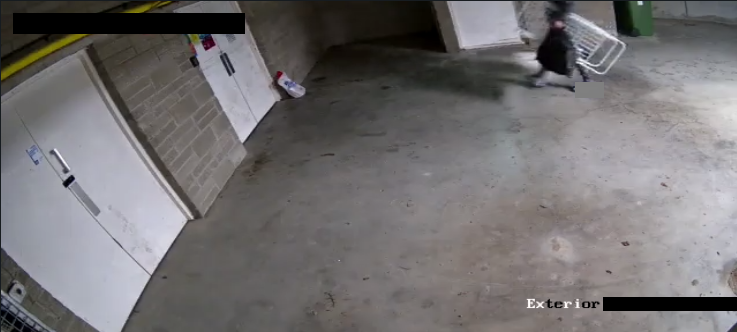
Above: A clothes horse on the way to the bin store
Waste collection costs, after insurance and block management fees, are about the most expensive line item on an OMC annual budget sheet. Waste? WASTE? Let us know the price you are paying for your waste per apartment per year.
A collection lift of a 1100L residual bin costs about €30 per lift. The recycling bin of the same size costs €15 roughly speaking. Recycling more to save money?
The financial incentive structure works as follows, if a plastic bottle is disposed of in the residual waste bin, it costs twice as much to collect as if it had been put in the Dry Mixed recycling bin. If you hadn’t bought the plastic bottle in the first place, there wouldn’t be any collection costs.
The return scheme has altered these incentives for bottles and cans. If waste disposal processes are not built into the cost of an item, then it is not being priced correctly.
As the waste collection charge is levied per lift, uncrushed cardboard boxes, bulky items, and packaging are disproportionately expensive to dispose of.
The incentive to remove food waste (which is heavy but compact) from the residual waste stream is very low under the charge-per-lift model. In all developments I know of at the time of writing, the brown bin is as expensive as the general waste bin per volume.
Despite all the incentives, it has to be about just less waste.
Residents only experience the bin store from their own perspective. We don’t get to see how other people use it.
If one bag is left of the ground, especially if it impedes access, other bags will quickly follow like a snowball gaining size and momentum as it rolls down the hill.
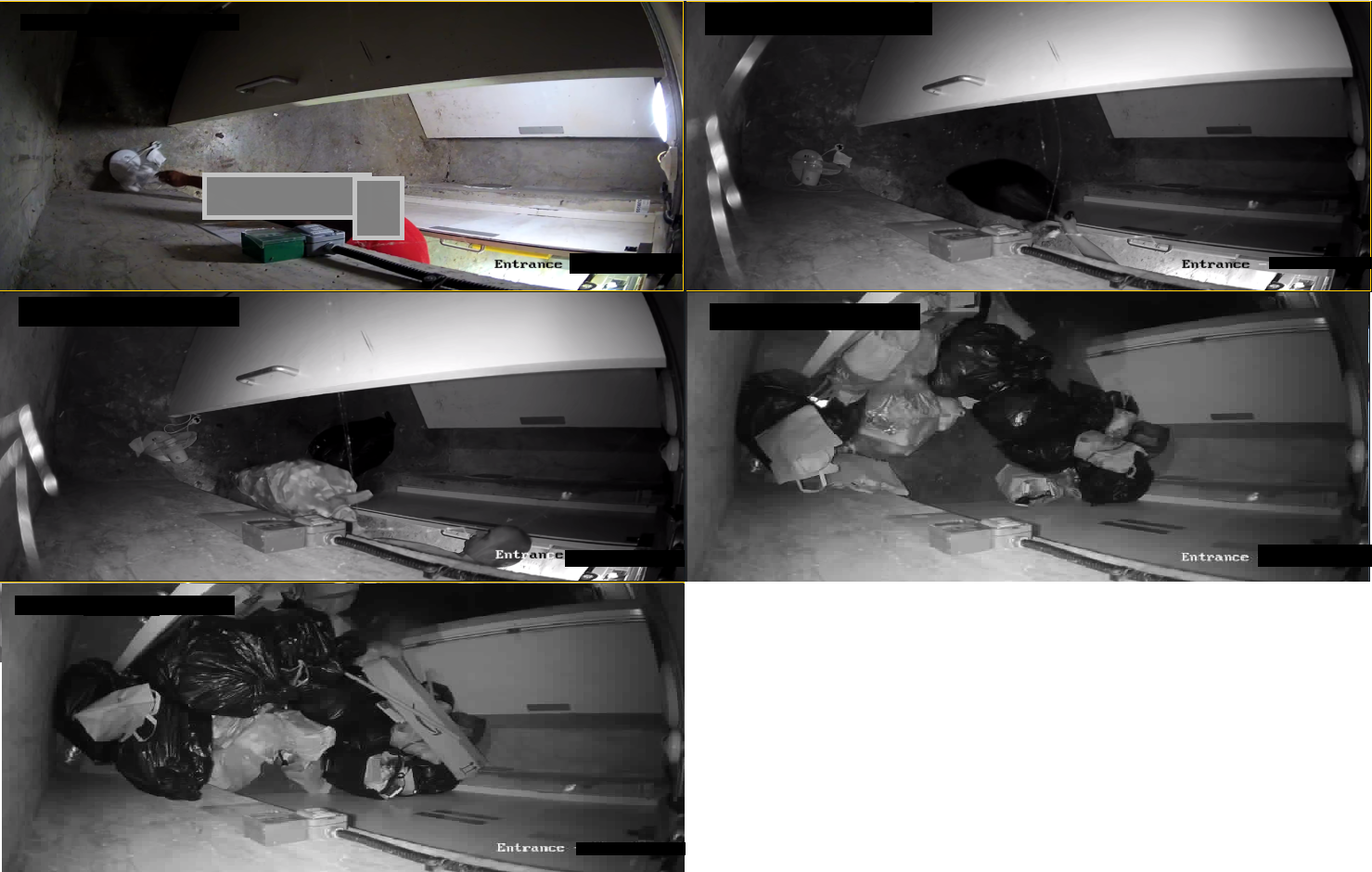
Above: An example of waste snowballing
So it is a mistake to take the issues around bin stores personally. There may be a campaigning director/resident who has had enough of the mess or is frustrated by constant contamination. However, the issues are the problems of the commons and as such are rarely solved or caused by one individual.
The Ring of Gyges, by granting its bearer invisibility, and thereby bestowing upon them freedom from accountability, was said to corrupt the soul of anyone who put it on. Who amongst us wouldn’t act to our own advantage if it was impossible to trace it back to us? Even in a bin store.
A communal bin store is liable to the Tragedy of the Commons. There is no charge at the point of use, with bills issued to the owners (management company) on a monthly basis and a budget being agreed once a year. A tenant effectively can dispose of their (or any) waste for a flat yearly fee. Any Homo economicus, whether tenant or owner occupier, benefits by disposing more than their neighbours, with the associated costs spread evenly across all apartments. It’s like agreeing to split the bill at dinner without noticing that one person is ordering champagne and caviar while you have asked for a small salad. In most bin store set ups, the opportunist is cloaked in anonymity.
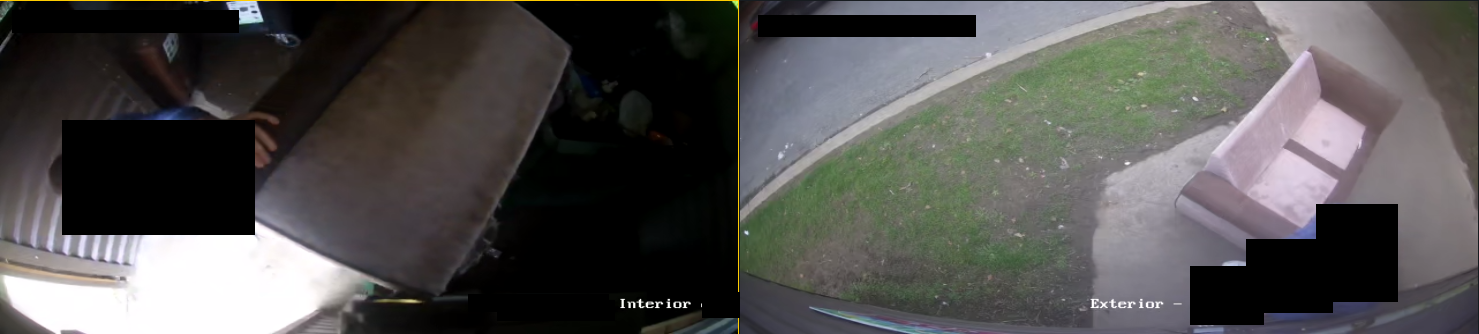
Above: No consequences
Elinor Ostrom was awarded the Nobel Prize in Economics for developing an approach to management common pool resourses, and over coming the Tradegy of the Commons. In brief, an entrepeneur helps the people sharing a limited resource by establishing and enforcing agreement over how the commons must be used following specific principles. This is ACCESSGREEN's approach to apartment bin stores.
Efforts to reduce your household waste by an individual or family is, in all practical senses, an increase in the cost (per volume) for that individual.
A few, mercifully rare, people just don’t care. God has taken the trouble to disperse them thinly, at a rate of about one per apartment block.By the same token, there are some residents who clean up after others and receive no thanks at all. I’d like to pause and take the chance to thank them here. You have a good soul. Make sure you have enough left in reserve so that anger doesn’t swamp you.
Disgust is a powerful emotion. A resident will complain that they can’t enter the bin store because of litter on the ground and so they have to throw their black sack from the door way. It is often these thrown bags that hit the rim and fall on the ground, the plastic getting ripped open by scavenging birds or the wheels of the bins as they are rolled out at collection time. This creates the very litter on the ground which will stop the next person entering. And on it goes.
Apart from nappies, sanitary and medical items, there is very little to arouse disgust about what we throw away before it goes in the bin if you think about it. It is Father Time that is the culprit. The contents of the bin + time = disgust.
No one ever takes a selfie in a bin store. If you have taken a selfie in a bin store, please share it. I'd love to see it.
Don’t think about waste. So says Annie Duke at the end of her book Quit. She is talking about the sunk-costs fallacy. Perhaps the lesson is the same. Just do things differently from now on.
The single group of people who dispose of the least waste, who avoid packaging, and never contaminate etc. are the dead.
A hole? A toilet? A resource? A digestive system? A filtration system? What is a helpful analogy to improve our thinking about an apartment bin store? The best run bin store I have seen was inspired by forest trails through a nature reserve.
Apartment blocks house communities with loose bonds - the residents of different households barely know each other. The threshold of the bin store is perhaps the only location in the development that all households will cross regularly.
People feel their waste is private. It is not. It is your shame that makes you believe that.
Mounds of sea shells buried underground have been found dating back to prehistoric times. It is thought that early communities buried their food waste to hide their tracks and so evade predators. To this day, every part of the waste disposal process is designed to hide our waste. From brown plastic kitchen caddies and black sacks to the placement of bin stores in underground car parks away from main thoroughfares, we try to obscure and hide it. Why not bring it to light the way IKEA makes all its customers walk through its warehouse as they go to the check outs?
Average use per week for 10 households is one 1100L residual bin and half a 1100L recycling bin. The brown bin doesn’t have such an established pattern yet.
There are many statistics generated to understand waste. We used smart technology to see which lids are lifted and tested an app to nudge and prompt. Although most bin stores are reducible to a few commons elements, some factors are more important than others. The waste collection costs per apartment per month across developments shows a variance from a high of €31 to a low of €9. How do you account for such variance?
Waste storage in an apartment kitchen can take up about one quarter of the available floor space.
I have heard it argued we should just bury all the plastic, sequestering the carbon. Don’t @ me.
Did you know that bottle bank bins are lifted at collection and emptied into the same container on the collection truck? Sorting the glass by colour is not about the recycling process of green or brown glass. It is to ensure that the glass is spread more evenly across the available bins at the bottle bank. There should be a term for this so we can recognise the concept in other areas.
Domestic waste is highly entropic, turning something you were happy to pay good money for into bin juice. Think of the disorder of the jumbled black sacks filled with your discarded flotsam in a 1100L bin compared to the gleaming high-ordered products on display in a shop front where you bought your goods. The bins themselves seem to have grinding teeth.
The concept of ligan goods could work well for apartment blocks.
The majority of the people issued warnings in relation to breaches of house rules (rather than those that are sent a “bill of cost” to “remedy a material breach of the house rules” as per the MUD act) aggressively complain about the bin store in reply.
The main issue for the brown bin is getting the organic waste from the apartment to the bin store. Too many residents use a non-compostable plastic bag and then contaminate the bin. The next biggest issue is how regularly it should be collected to control costs.
Residents struggle, for whatever reason, to get dog-poo bags into the bins. They are often left at the door, on the ground or thrown at the bin. The waste collection teams ask me to tell you to stop this please.
The processes and usage of the bin store are not generally resilient. Larger disorder follows on irrevocably from a small mishap. Entropy increases over time. A caretaker can reset the process quickly.
If I had to give free advice to an OMC I’d say the first action is get good signage and then invest in the door. Get the best door you can. Then use access control to manage and educate the users.
If it needs saying, don’t drag your sack of waste to the bin store.
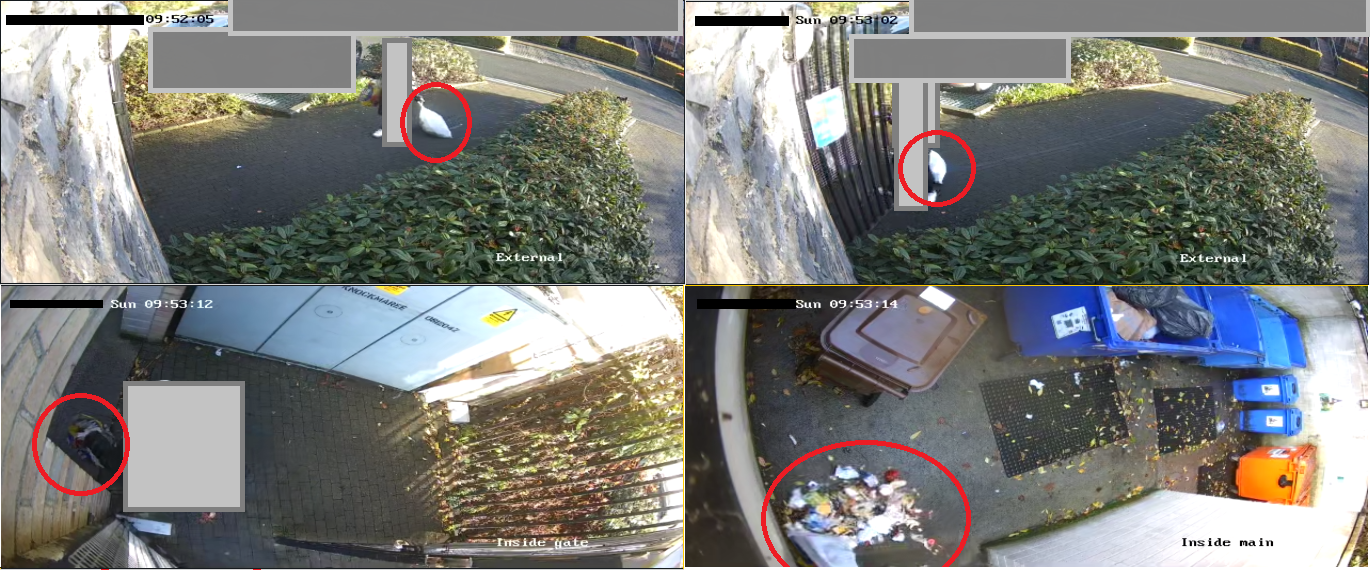
Above: The dragged sack splits just before it reaches its destination.
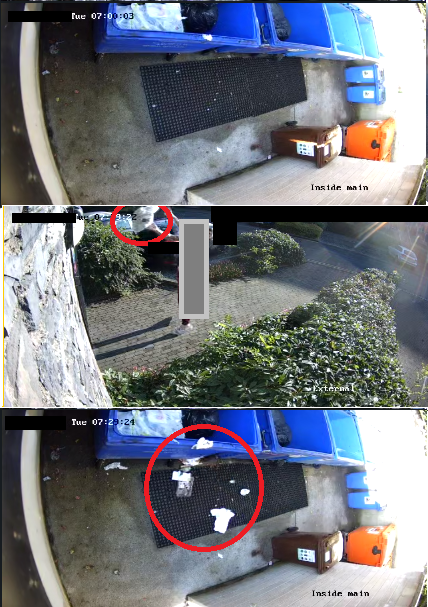
Above: A bag thrown over the wall splits as it hits the rim. No 3 points.
This essay was originally published on The Go Table Substack. It has been republished here, slightly modified, with permission from the author.